
Aluminum Tubes for Pharmaceutical and Food Packaging
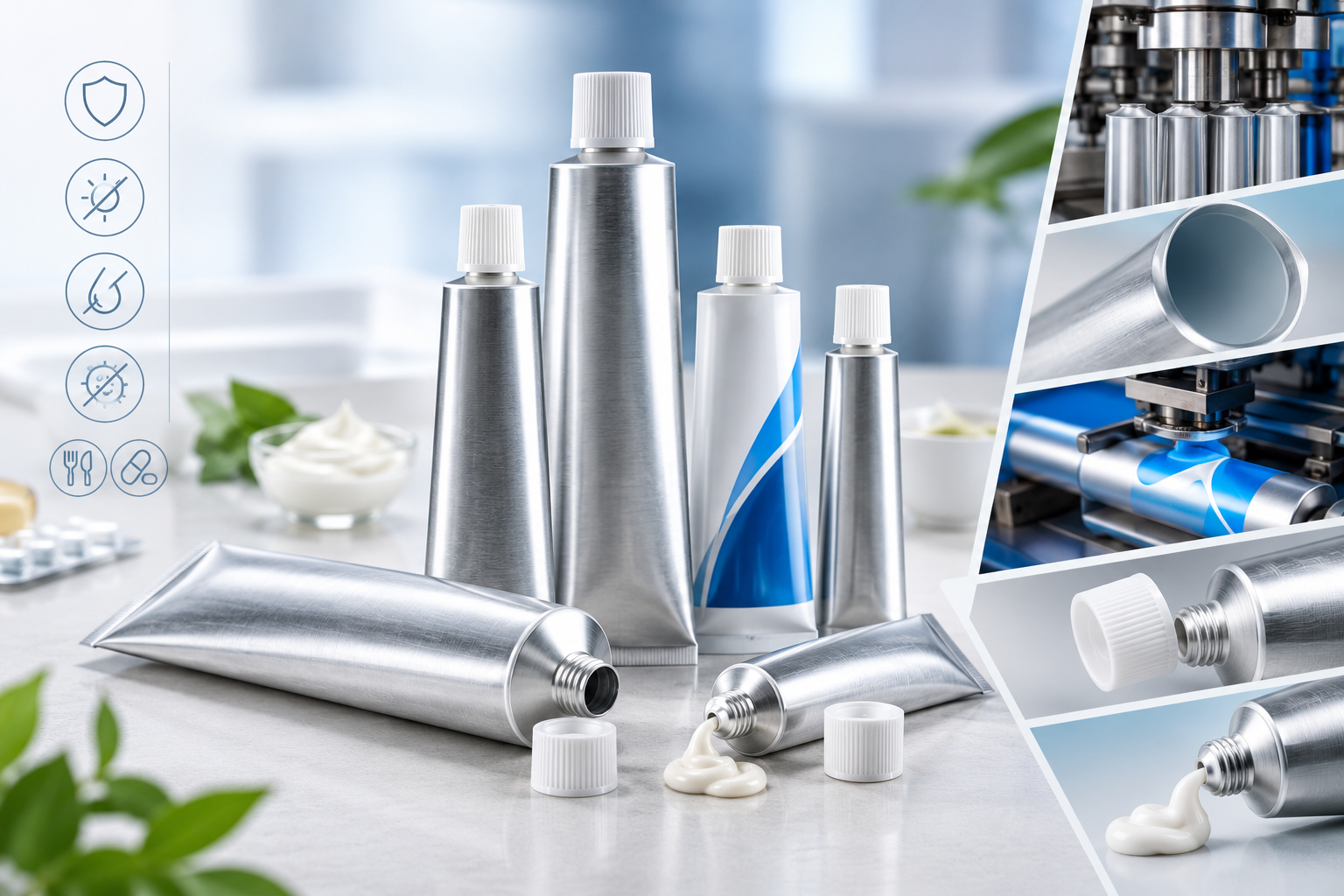
NATPACK aluminum tubes are collapsible containers for creams, ointments, and gels that need full protection from light, moisture, and air. They are used mainly for pharmaceutical products and for food products that require sterile filling and a strong barrier.
Why aluminum for ointments and creams
Aluminum blocks light, moisture, and air, so it prevents oxidation, contamination, and chemical breakdown. The formulation stays stable for its whole shelf life, even in high heat. The surface does not absorb the flavor or smell of the product, and the metal is non-toxic.
When the tube is squeezed, air does not flow back in. That lowers the risk of contamination and sets aluminum apart from tubes made of laminated layers. An opened aluminum tube cannot be refilled or used again. It is also light, which makes it easy to handle and cheaper to transport, with a smaller carbon footprint in transit. The bright surface gives the pack a polished look on the shelf.
NATPACK aluminum tube sizes
NATPACK aluminum tubes come in several outer diameters, for example:
- 19 mm diameter: approximate length 70 to 130 mm, approximate capacity 10 to 20 g.
- 22 mm diameter: approximate length 90 to 140 mm, approximate capacity 15 to 30 g.
- 25 mm diameter: approximate length 110 to 155 mm, approximate capacity 25 to 50 g.
Send us the size you need when you request a quote.
How NATPACK aluminum tubes are made
Production has four stages:
- The tubes are formed by pressing, then trimmed at the ends.
- The inside receives a varnished coating for sensitive formulations, and the outside is lacquered to protect the printing. The aluminum itself resists corrosion.
- Printing is done by offset or screen printing, cured with heat instead of ultraviolet light.
- A polyethylene cap is fitted to the tube.
How to choose between aluminum and plastic tubes
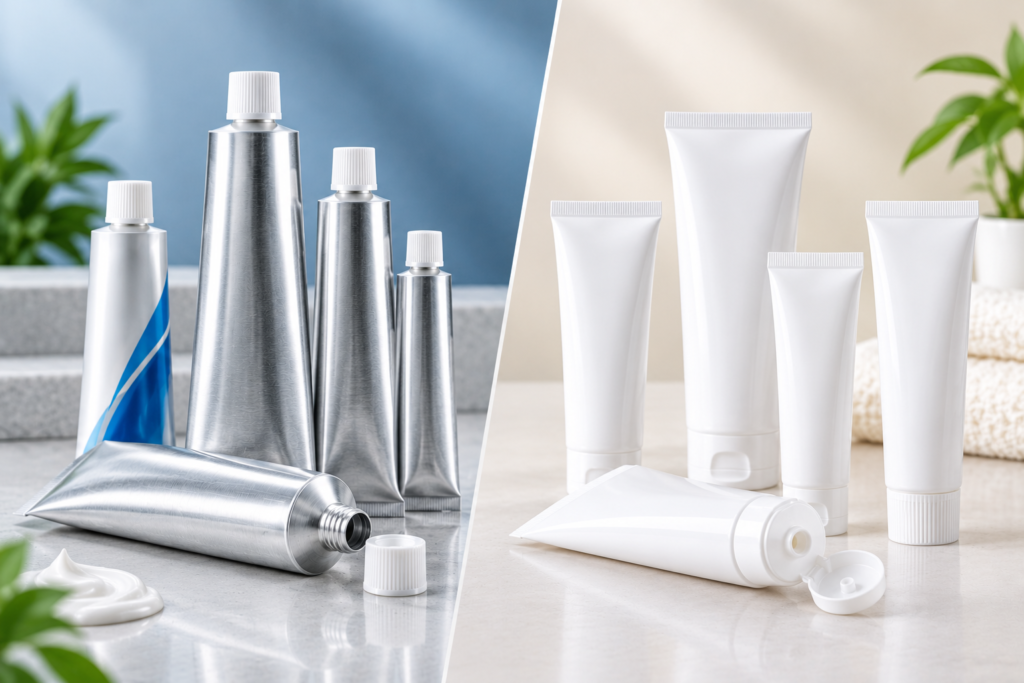
Plastic tubes cost less, and they are sufficient when the formulation does not need a high barrier against oxygen and moisture. Aluminum gives a stronger barrier against light, air, and moisture, so it suits formulations that cannot afford any exposure to them, such as pharmaceutical ointments and creams.
Three things should guide the choice: how sensitive the formulation is, the budget for the pack, and whether the pack needs to be easy to recycle.
Quality certifications and clients
NATPACK holds ISO certifications, and the details are on the Quality and Certifications page. The company has a record of serving pharmaceutical companies in packaging, and it works with clients in pharmaceuticals, food and beverages, and cosmetics.
Uses of aluminum tubes
The main use of these tubes is packaging pharmaceutical creams, ointments, and gels. They also suit food products that need sterile filling and a strong barrier against air and moisture. They are used for packaging adhesives too, thanks to the strong barrier they provide against air and moisture.
Request a quote for aluminum tubes
The price depends on the size and the quantity. Send us the size you need, the type of formulation, and the quantity, and the NATPACK team will reply with specifications and a price. Contact us for your packaging needs.
FAQ
Which sizes are available?
Outer diameters of 19, 22, and 25 mm, with capacities from about 25 to 50 g depending on the density of the formulation.
Can an aluminum tube be refilled?
No. Once opened, the tube cannot be refilled or reused.
Does air reach the product during use?
No. Air does not flow back into the tube when you squeeze it, so the risk of contamination is lower than with laminated-layer tubes.
Is it suitable for sensitive formulations?
Yes. The internal lacquer coating is designed for sensitive formulations, and aluminum itself resists corrosion.
What is the difference between aluminum and plastic tubes?
Aluminum gives a stronger barrier against light, air, and moisture. Plastic is cheaper, lighter, and easier to recycle.